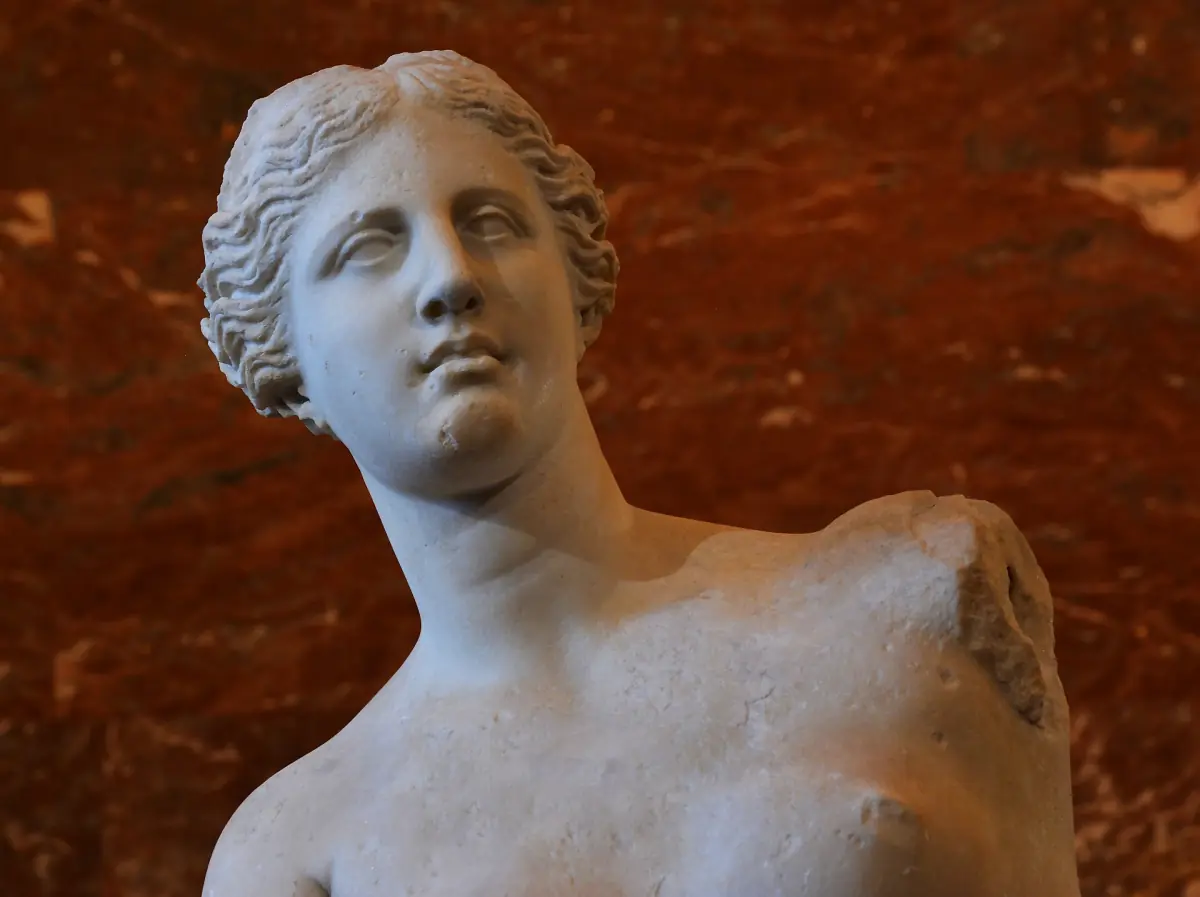
Venus de Milo at a glance
The Venus de Milo is a Hellenistic statue of Aphrodite carved from Parian marble. The museum's collection database dates it to 150 to 125 BC and gives Melos, also spelled Milos, as the place where it was found. She is one of the best-known works in the Louvre, along with the Mona Lisa and the Winged Victory of Samothrace.
You find her in the Sully wing on level 0. The museum uses level 0 for the ground floor, so you do not need to climb. Which room number is correct depends on the source, and we explain that below. This guide is independent and has no link to the museum, which sells its own tickets. See our ticket guide for 2026 prices.
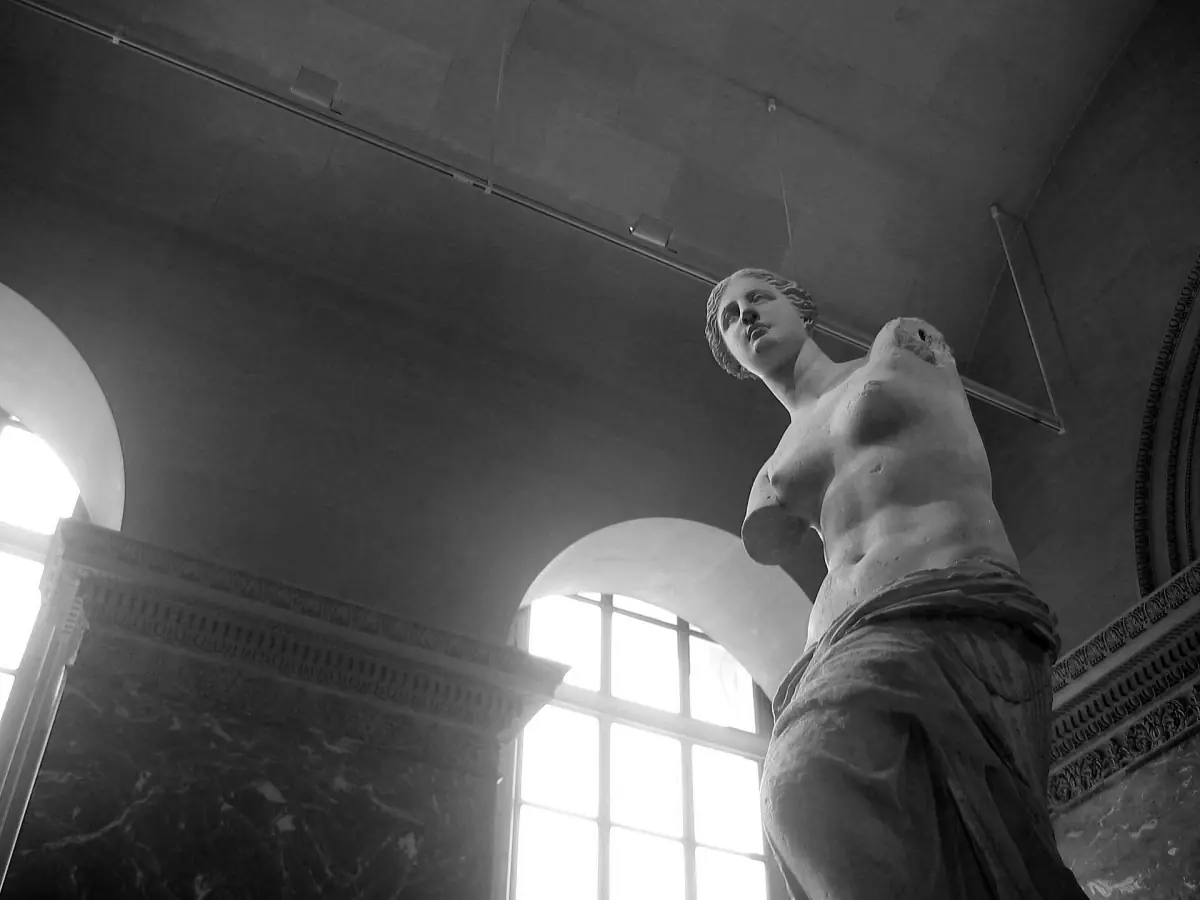
Room 345 or 346?
The museum's own pages disagree, and we show both so you can look in the right place.
| Museum source | Wing and level | Room |
|---|---|---|
| Collection database | Sully, level 0 | 345 |
| Article on Greek beauty | Sully, level 0 | 345 |
| Masterpieces course | Sully, level 0 | 346 |
The wing and level agree on every page. If you walk into the Greek sculpture rooms of Sully on level 0, you are in the right area. Ask a member of staff or check the signs for the exact room. The museum publishes a free paper plan at its information points, and our map guide explains the wings and levels.
The missing arms
People ask first why she has no arms. The museum describes her original appearance as uncertain. Two ideas appear often: that she held an apple, or that she held a shield. The museum treats both as interpretations, not as a proven reconstruction.
One practical detail is documented. The statue was made from separate blocks of marble, and the arms were attached separately. The museum does not link the loss of the arms to one modern accident, so be careful with stories that name a single moment of damage.
That uncertainty is part of the appeal. Stand close and look at the stance, the drapery and the way the body turns.

Louvre tours that include the Venus de Milo
Guided Louvre visits that stop at the Venus de Milo and other sculpture, with live prices and availability.
How she came to the Louvre
According to the museum's masterpieces course, the statue was presented to King Louis XVIII, who gave it to the Louvre in 1821. That is the date of the transfer to the museum.
The statue is part of the museum's own masterpieces course. Our list of 15 works places her at number five.
Fitting her into your visit
Three practical points.
Check the room list
The museum warns that rooms close on rotation. Check the list of available galleries for your date, and treat a listed room as the normal location, not a promise.
Combine her with the other two
The Winged Victory is in the Denon wing on level 1, room 703, and the Mona Lisa is on the same level in room 711. Do Sully first, then cross to Denon. The Winged Victory page and the Mona Lisa page tell you what to expect.
Photos and security
Private photos are allowed in the permanent collections, but flash, extra lighting and selfie sticks are banned. Everyone passes a security check at the entrance, and bags above 55 x 35 x 20 cm are not allowed in the reception area.
Timing
The Louvre is open 9:00 to 18:00 on Monday, Thursday, Saturday and Sunday, and 9:00 to 21:00 on Wednesday and Friday. It is closed on Tuesday. Our opening hours page has the details.
More from the Louvre
Other pages that go with a visit to the Venus de Milo.

15 works to see
A numbered list with wing, level and room, and a route.
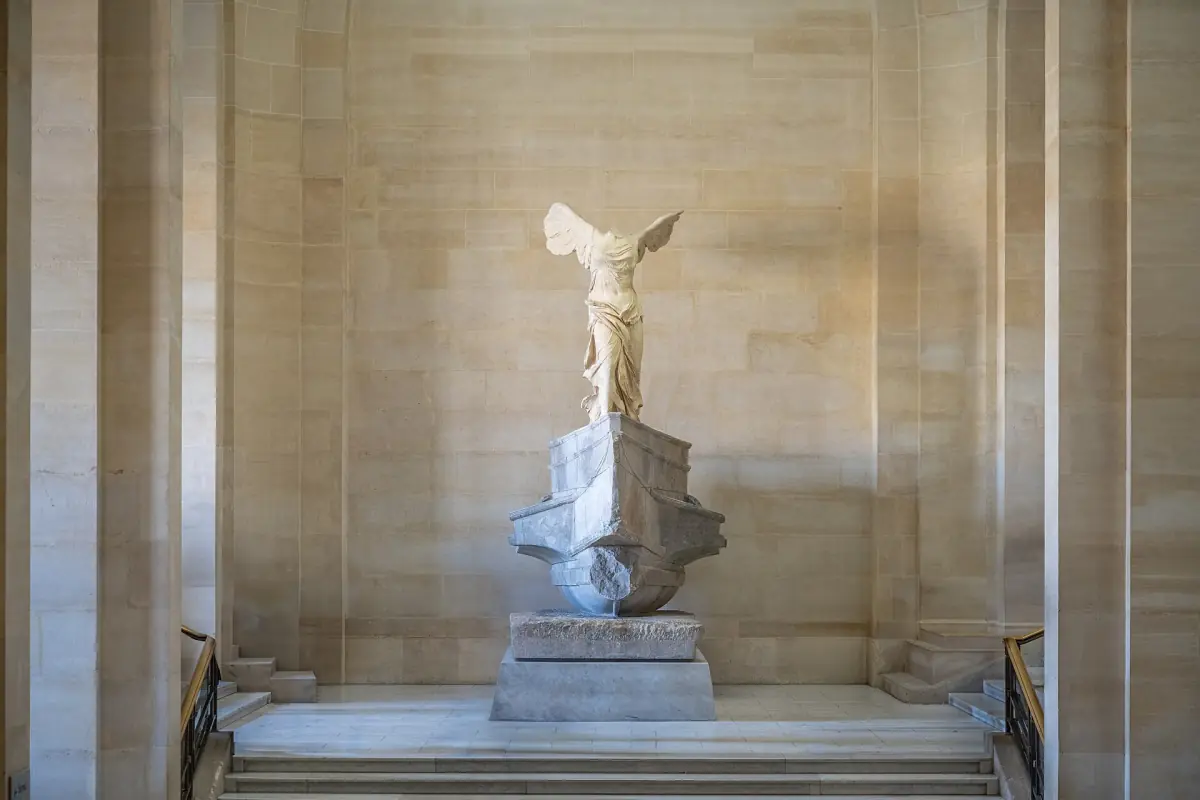
Winged Victory of Samothrace
The statue at the top of the Daru staircase.
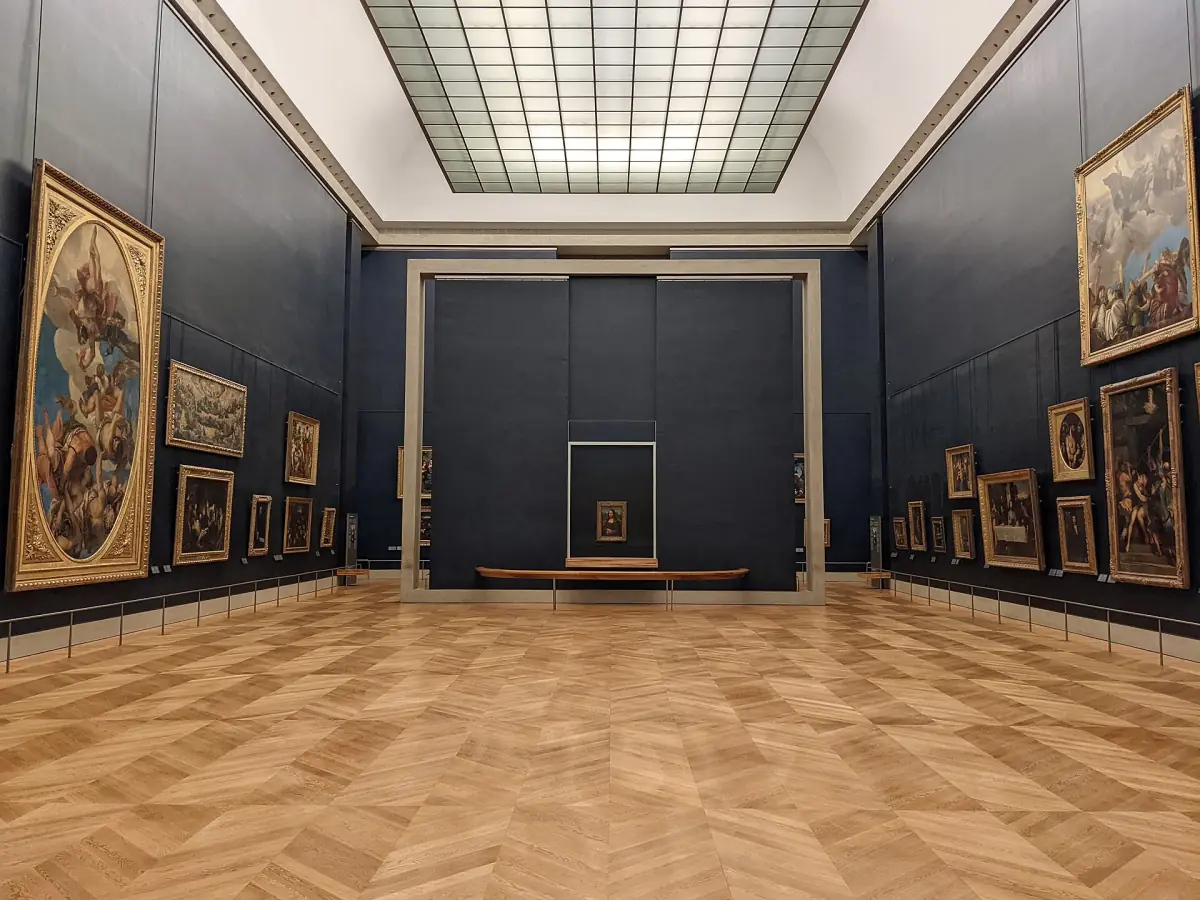
The Mona Lisa
Room 711 in the Denon wing and viewing tips.

Map, wings and entrances
How the three wings and the levels fit together.
Venus de Milo: frequently asked questions
Where is the Venus de Milo in the Louvre?
In the Sully wing on level 0. The museum gives room 345 in some pages and room 346 in others, so check the signs on site.
Why does the Venus de Milo have no arms?
The museum says her original appearance is uncertain. Ideas about an apple or a shield are interpretations. The statue was made from separate marble blocks, with the arms attached separately.
How old is the Venus de Milo?
The museum's collection database dates her to 150 to 125 BC, in the Hellenistic period.
Where was she found?
On Melos, also called Milos, according to the collection database.
When did she come to the Louvre?
She was given to the Louvre by King Louis XVIII in 1821, according to the museum's masterpieces course.
Do I need a separate ticket?
No. She is part of the permanent collection covered by museum entry. Check the current time-slot rules before you go.